
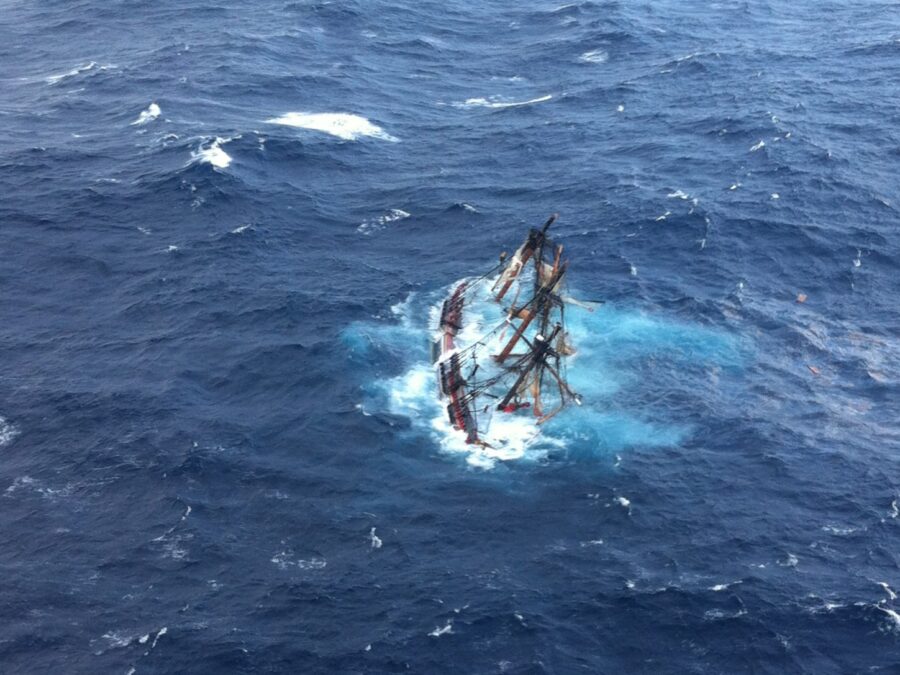
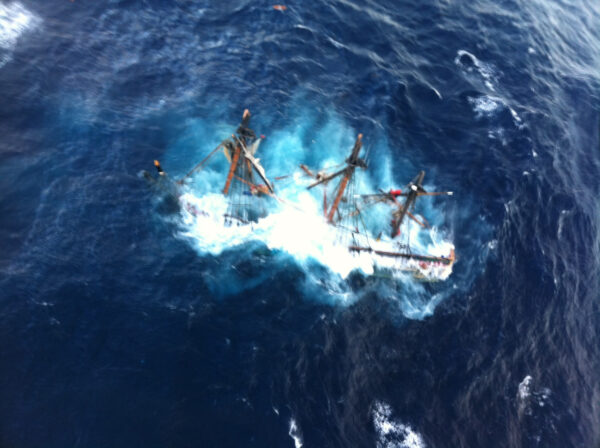
As Hurricane Sandy approached land, HMS Bounty and 16 sailors aboard were in dire need of help. More than 90 miles off the coast of Hatteras, North Carolina, the three-masted sailing vessel had lost power and was taking on water in an area mariners call the “Graveyard of the Atlantic” for its infamously treacherous seas. With its pumps failing, the Bounty’s crew was forced to abandon ship. Adrift in two life rafts, they were powerless against the raging seas.
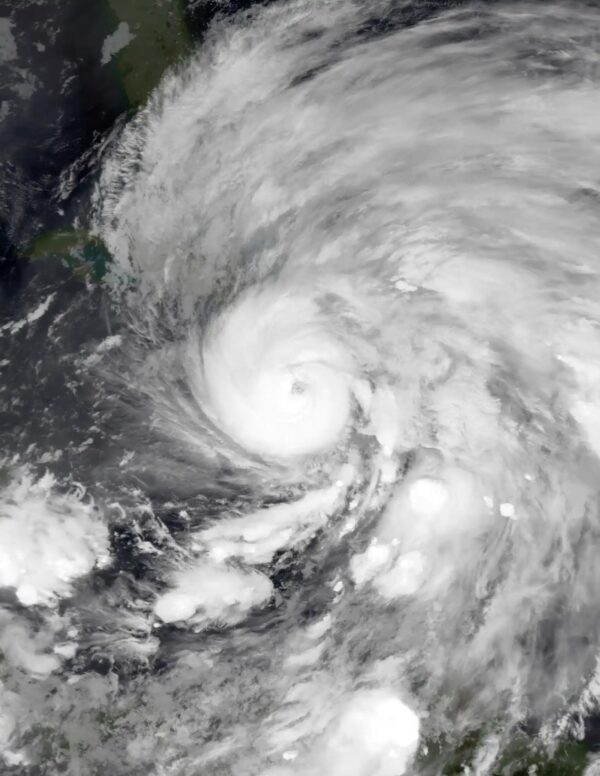
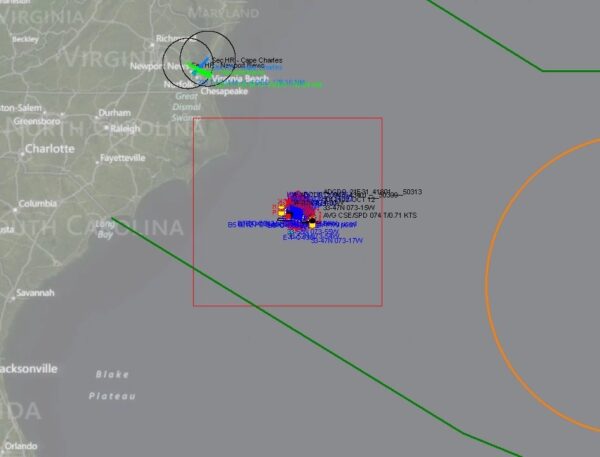
As this scene played out late Sunday evening, Sandy’s winds were more than 60 knots and a C-130 “Hercules” airplane from Elizabeth City was launched. Needless to say, the aircrew encountered significant turbulence and after flying through bands of the storm, they arrived on scene.
The Hercules was the first sign of salvation for Bounty’s survivors, and the aircraft kept watch over the adrift sailors through the night deploying flares, additional life rafts and a self-locating datum marker buoy, a device that helps the Coast Guard measure surface currents to aid in the search for survivors.
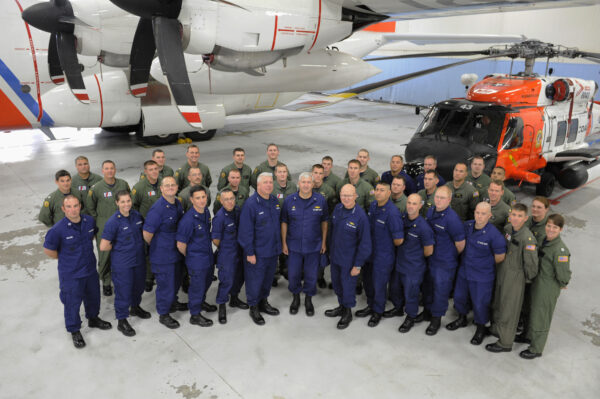
As the Hercules stood sentry, Elizabeth City launched rescue helicopter CG-6012, piloted by Lt. Cmdr. Steve Cerveny, to begin rescue operations. Wearing night vision goggles, the helicopter raced to the scene amidst heavy rain and powerful winds. They had to fly low, at about 300 feet, to stay below the clouds and they arrived just after sunrise Monday morning.
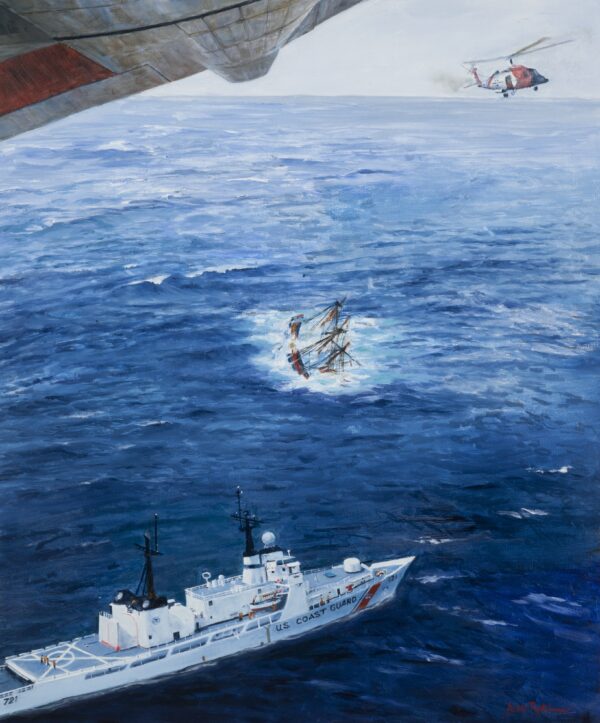
Soon, they spotted a survivor in the water, adrift and alone. The survivor was wearing an insulated suit and co-pilot Lt. Jane Pena spotted the strobe lights attached to it. Before they could hoist the sailor to the safety of the helicopter’s cabin, the air crew had to overcome the challenge of safely deploying their swimmer and rescue basket amidst Sandy’s fury.
“The biggest challenge was the wind and the waves,” recalled Petty Officer 3rd Class Mike Lufkin. “During the recovery of the survivors from the life raft, we tried adding weight bags in the basket to make it more manageable in the wind, but once the basket hit the water, it sunk.”
After trying a few different methods their teamwork persevered and soon Petty Officer 2nd Class Randy Haba, the crew’s rescue swimmer, was pulling people out of the life raft and bringing them safely aboard the Jayhawk helicopter. Pena recalls looking out at this point and seeing another strobe in the distance. It was the sunken ship, with only its three masts sticking out.
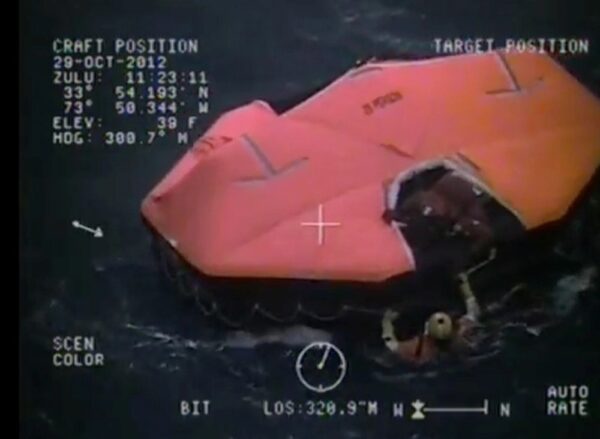
With the crew of the CG-6012 focused on getting the survivors out of one life raft, rescue helicopter CG-6031 arrived on the scene ready to rescue survivors from the second life raft. Pilot Lt. Cmdr. Steve Bonn is no stranger to harrowing rescues. He flew in some of the toughest conditions Mother Nature can conjure as a rescue pilot in Alaska. But despite his experience, he was still stunned as he witnessed 30-foot waves literally breaking over the top of the life rafts when he arrived on scene.
Bonn didn’t take the time to dwell on the sheer enormity of the seas. CG-6031 had an hour to conduct the rescue so they could make it back to their airbase without running out of fuel. He piloted the helicopter above the second life raft, about a mile away from the first. Inside, the survivors were huddled together, cold and weary.
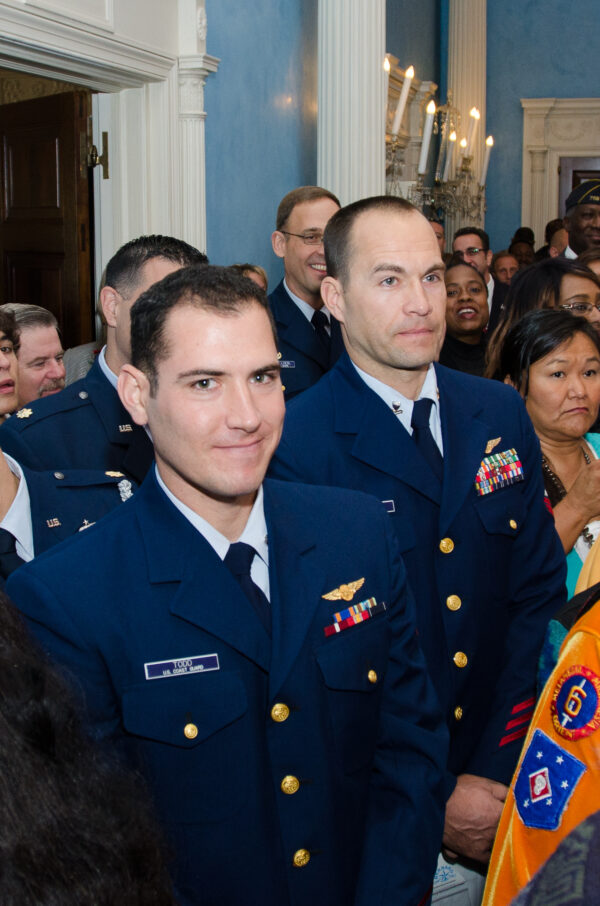
Cue rescue swimmer Petty Officer 3rd Class Dan Todd. Todd swam to the raft and in a particularly calm, candid moment greeted the survivors with, “Hi I’m Dan, I heard you guys need a ride.”
When we show up, it’s the worst day of these survivor’s lives, using an icebreaker like that helps them relax knowing that we’re in control and that this is just another day for us,” said Todd. “It was good that we got to go help people. We were just doing the job.
While Todd was getting tossed around in the seas—what he describes as feeling like being in a washing machine—Petty Officer 1st Class Gregory Moulder literally held the safety of his swimmer and the survivors in his hands as he operated the helicopter’s winch. As the rescue took place, Moulder was focused on keeping Todd and the survivors as steady as possible and his shoulder was taking the force of each wave. At one point during the rescue, he tells his fellow crew he probably threw his shoulder out, in the most matter-of-fact way possible.
“Well, my shoulder hurt like hell…I didn’t dislocate it, but I probably strained my shoulder and elbow stopping the basket from swinging in the high winds,” said Moulder.
The hurricane-force winds generated seas that left no room for error, a fact all involved were reminded of through the omnipresence of a single word, repeated over and over: “Altitude!” Co-pilot Lt. Jenny Fields explained the warning heard repeatedly throughout the cabin and in the cockpit is part of a safety system that uses radio waves and timing to measure the distance between the bottom of the helicopter and the surface of the water. Despite how distracting the warning may sound to the casual observer, Fields processed the warning but remained solely focused on keeping the helicopter steady.
“The difficulty is not necessarily flying so low but maintaining position with the life raft and rescue swimmer in the water,” said Fields. “The wind and waves were constantly pushing the targets through the water, so it was a lot of work for the pilots at the controls in the helicopters to stay in position.
At the conclusion of “just another day” for the Coast Guard aircrews, 14 survivors were headed home to their loved ones … but the search continued for two remaining members of the crew.
Subsequent aircraft were sent out and Coast Guard Cutters Elm and Gallitin were diverted to the scene in search of the two missing sailors. One would be recovered seven nautical miles from the vessel’s original reported position unresponsive. Several days later the search would be suspended for the remaining crewmember. Suspending a search and rescue case is one of the hardest decisions Coast Guard men and women must make, but ultimately—after searching more than 90 hours and covering 12,000 overlapping square nautical miles in the Atlantic Ocean since the Bounty’s crew abandoned ship—the search for Bounty’s captain, Robin Walbridge was called off.
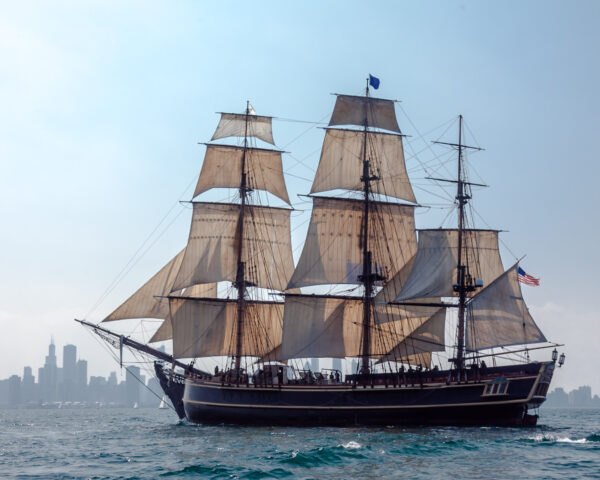
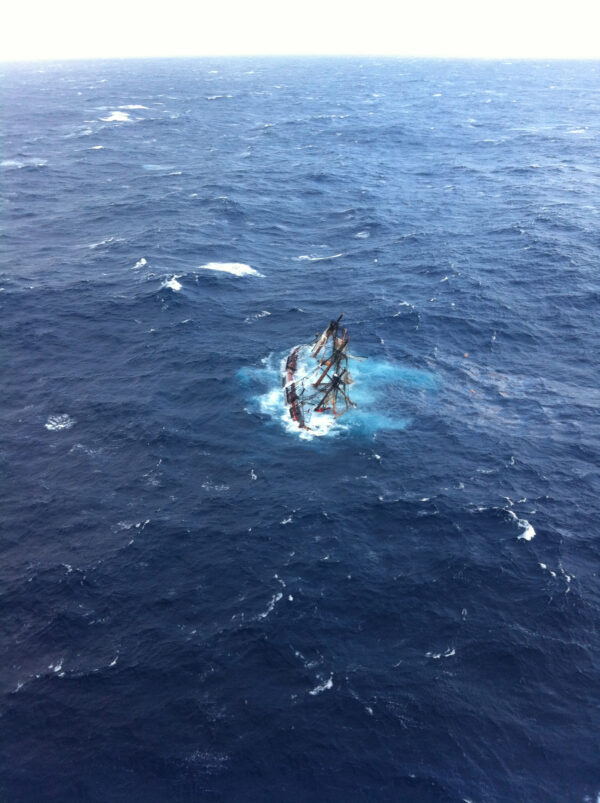
The search and rescue operation to save the crew of HMS Bounty has already become one of the enduring images of Hurricane Sandy, but for 14 men and women who called Bounty home and the families of the two who have not returned it will be the bravery of the rescue crews who willingly put themselves in harm’s way to save those in peril that will last a lifetime.
Rescue Operations
National Coast Guard Museum insider tip: Visitors to the National Coast Guard Museum will be able to learn more about the increasingly complex nature of rescues like the Bounty in the SAR in the 21st Century exhibit on Deck 2 of the museum!