
The author wishes to thank members of the Coast Guard’s retired and active-duty icebreaking community whose feedback informed the writing of this essay.
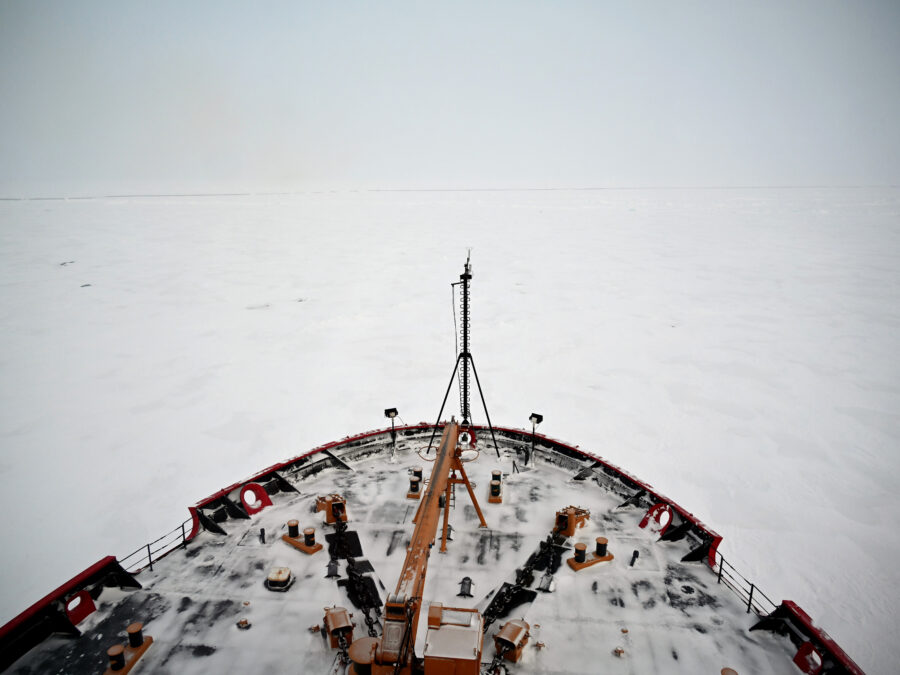
Since the late 1800s, the United States Coast Guard and its predecessor agencies have played an essential role in U.S. polar operations. As U.S. commercial and strategic interests spread into the Arctic, a new kind of ship evolved unknown in other maritime domains. These “icebreakers” required thick steel, reinforced hulls, powerful engines, ice-crushing bows, great endurance, and cold weather habitability to operate in the world’s deadliest climates.
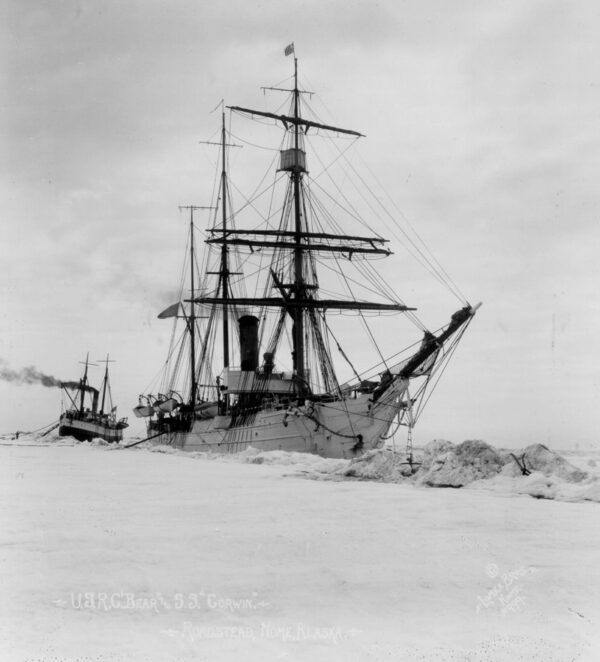
Prior to World War II, the service sent vessels into the Alaskan Arctic that could survive in the ice. However, they lacked the hull strength and power to break significant amounts of floating ice. In fact, Coast Guard cutters were generally sent north of the Arctic Circle only in the warmer months. However, during the war, the service had to serve in icebound waters year-round both domestically and in the Greenland theater of operations. Consequently, during the war the Coast Guard developed into the world’s leader in icebreaker design and construction.
Based on the designs of Coast Guard engineer, Lt. Cmdr. Edward Thiele, the Coast Guard and Navy built the first modern icebreakers. The famed Wind-class ships were considered the heavy icebreakers of their day. Nine icebreakers were built based on the Wind-class design, including Eastwind, Southwind, Westwind, Northwind, and Staten Island; Navy icebreakers USS Burton Island and USS Edisto; and design variants of the Great Lakes icebreaker Mackinaw and the larger USS Glacier, commissioned in 1955. Three of the “Winds” were even loaned to the Soviet Union between 1945 and 1950.
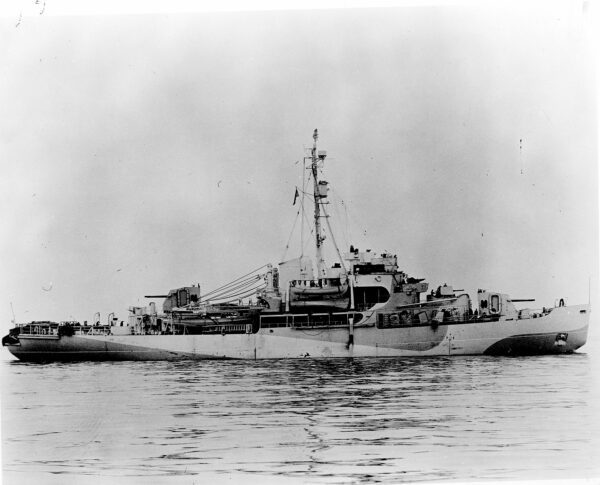
After World War II, the Winds became the backbone of America’s Cold War icebreaking fleet. Just after the war, in 1946, Northwind deployed to Greenland for Operation Nanook to establish military installations at North Star Bay. Later in 1946, Northwind made history by supporting Operation High Jump to Antarctica under polar explorer Admiral Richard Byrd. It was the first time a cutter had served in Antarctica, and it marked the last of the world’s seven continents to see a Coast Guard vessel. Later, beginning in 1955, Coast Guard icebreakers supported annual Operation Deep Freeze deployments to Antarctica breaking ice to U.S. bases and supporting polar meteorological and oceanographic research. After the installation of flight decks, the Winds’ helicopters also provided aerial surveys, and logistical and search and rescue support.
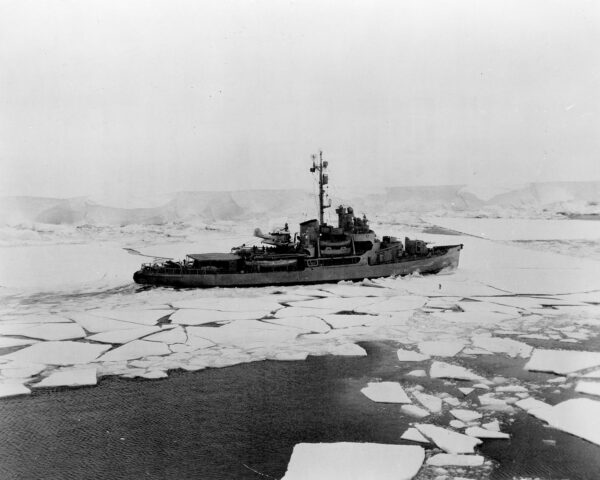
In 1965, the U.S. Navy began transferring icebreakers Glacier, Edisto and Burton Island to the Coast Guard enlarging the service’s fleet to eight polar icebreakers. By 1969, the Navy transferred all its icebreakers to the Coast Guard, making the service the sole federal agency providing polar icebreaking services. Meanwhile, the Coast Guard had begun planning to replace its aging fleet of Winds.
Late in the 1960s, the discovery of oil on the North Slope of Alaska added a new dimension to Coast Guard icebreaking duties in Arctic waters. In 1969, Northwind and Staten Island escorted the tanker SS Manhattan across the Northwest Passage to test the feasibility of shipping oil from Prudhoe Bay. In 1971, Northwind surveyed the North Slope and freed an icebound convoy of 20 tugs and 40 barges destined for Prudhoe Bay. Southwind, Burton Island and Staten Island also supported the new Alaskan oil boom. All the while, the Coast Guard’s icebreakers supported Operation Deep Freeze deployments and U.S. national interests in Antarctica.
By the 1970s, the Winds had reached the end of their service lives. Of the eight Coast Guard and former Navy icebreakers, the first was decommissioned in 1968 with four following in the 1970s. With aging vessels and new demands, Congress authorized funding for new icebreakers. The funding paid for construction of the Polar-class icebreakers, the first U.S. icebreakers authorized since USS Glacier in the early 1950s. Named Polar Star (WAGB 10) and Polar Sea (WAGB 11), these icebreakers were designed to fill the demands of two Wind-class icebreakers. They cost $50 million each, a considerable price tag at the time, but it was hoped that several more would follow.
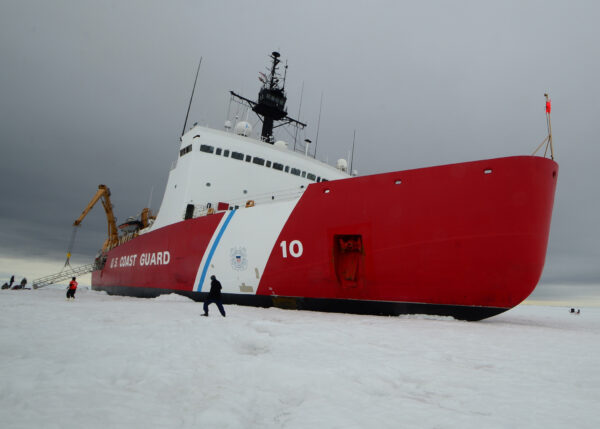
Budgetary constraints limited the Polar class to only two icebreakers. They were laid down in 1974 with Polar Star commissioned in 1976 and the Polar Sea in 1978. They measure 399 feet in length, displace over 13,000 tons and boast a football-shaped bow for icebreaking. They use six diesel electric motors generating 18,000 horsepower to power three propeller shafts in open water. Considered the most powerful non-nuclear icebreakers in the world, they use gas turbines generating 60,000 horsepower to break 6.5 feet of ice at a speed of three knots. By “backing and ramming,” they can break much thicker ice. They have a heated aloft conning station located over 100 feet above the waterline for greater visibility and control in challenging ice conditions. Controllable pitch propellers allow for changes in power and reversing without stopping engines, which is necessary to break ice by backing and ramming. The “Polars” even had with heeling tanks for rocking sideways to free them from solid ice; however, these proved ineffective and were later removed.
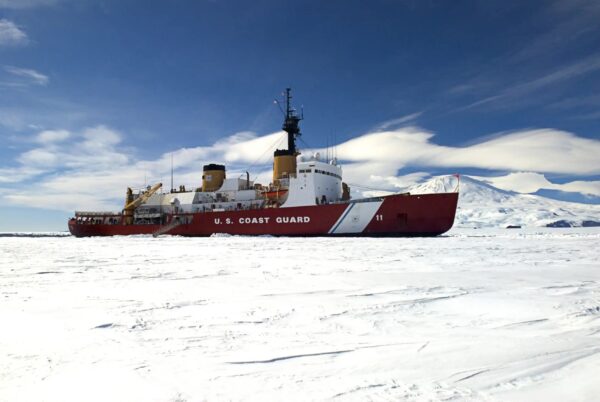
The Polars were designed to support scientific research on extended deployments. With a crew of over 130 members, the icebreakers’ designers paid close attention to crew comfort and habitability for extended deployments. These vessels can embark up to 30 research scientists and hold five containerized laboratories for a variety of marine studies, including geology, volcanology, meteorology, oceanography, sea ice physics and other specialized fields. They were also designed to carry two helicopters to support surveying, ice reconnaissance, logistical support, and search and rescue.
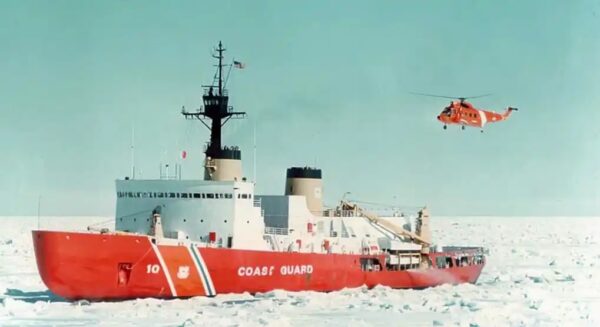
The Coast Guard’s last three Cold War-era icebreakers (Glacier, Westwind, and Northwind) were decommissioned in the late 1980s. After these decommissions, the “Polars” became the Coast Guard’s only workhorses for polar icebreaking. They made annual deployments to the Antarctic for Operation Deep Freeze often with a follow-on deployment to the Arctic. Their annual mission to the Antarctic required them to clear a channel averaging 30 nautical miles to the McMurdo Research Station in the Ross Sea. These channels allow tankers and cargo ships to deliver food, fuel, equipment and supplies for the station to remain open year-round. For example, in 2006, Polar Star broke nearly 100 miles of ice to reach McMurdo Station. Meanwhile, the Polars’ Arctic deployments supported national defense operations as well as research.
Operational highlights of the Polars’ early years included the Polar Sea visiting Point Barrow in winter (the first ship to do so) and an east to west transit of the Northwest Passage in August 1985. In 1983, Polar Star successfully circumnavigated Antarctica and, in 1988, she circumnavigated North America by way of the Northwest Passage. In August 1994, together with a Canadian icebreaker, Polar Sea became the first U.S. surface ship to reach the North Pole. During the same deployment, these two icebreakers also became the first ships to cross the Arctic Ocean. In 2022, Polar Star set the record for the world’s southernmost afloat position in the Bay of Whales, near Antarctica, a record set previously by Polar Sea and other U.S. icebreakers.
Through the 1950s, the U.S. had been an international icebreaking leader, but by 1990, its polar fleet had declined from eight icebreakers to just two. In the 1990s, the Coast Guard finally received funding to build an additional polar icebreaker. Commissioned in 2000, medium icebreaker Healy (WAGB 20) is among the most capable icebreakers in the world. At 420 feet long and displacing over 16,000 tons, the Healy is larger than the Polars, but she lacks the powerful gas turbines and football-shaped bow. Her 30,000 horsepower powerplant provides the muscle to break 4.5 feet of ice continuously at three knots or much thicker ice by backing and ramming. Healy’s modern design and diesel-only powerplant allows for a smaller crew than the Polars. While usually assigned to Arctic operations, Healy has also participated in one Operation Deep Freeze deployment to the Antarctic. However, her primary area of responsibility is the Arctic where she has visited the North Pole on four occasions, including the first unaccompanied visit by a U.S. surface vessel. She has also mapped thousands of miles of uncharted waters in the Arctic Ocean; Northwest Passage; and Chukchi, Beaufort and Labrador seas.
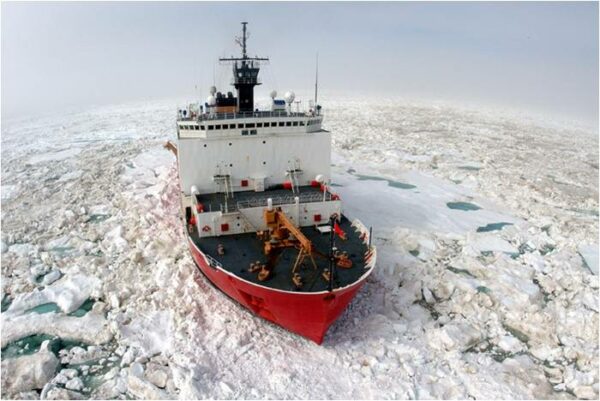
The complexity of icebreaker systems and the environment in which they serve increases the maintenance needs for these vessels. By 2006, Polar Star and Polar Sea had reached the end of their intended 30-year service lives. That year, the service completed a rehabilitation program to extend the service life of the Polar Sea to 2014. Also in 2006, Polar Star went into caretaker status awaiting funding to update, repair and replace antiquated equipment. In 2010, Polar Sea suffered a service-ending engine failure, so funding to restore the inactive Polar Star became a priority. During the time the Polars were out of service, foreign icebreakers had to be hired for annual Operation Deep Freeze missions. In 2012, after nearly $60 million in repairs, Polar Star returned to active duty. The Polar Sea became a “parts donor” until 2024 when she was mothballed in a Navy reserve fleet. Today, however, Polar Star and Healy remain two of the world’s most capable polar icebreakers.
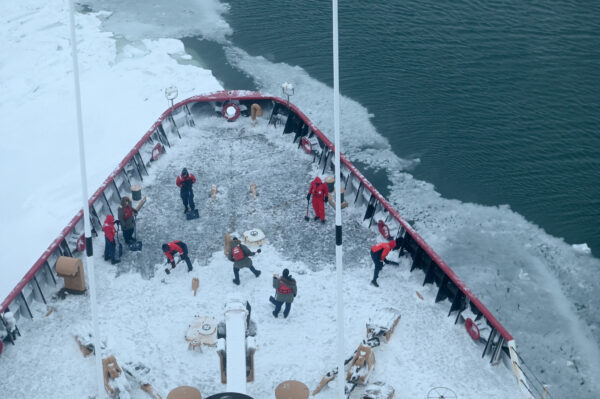
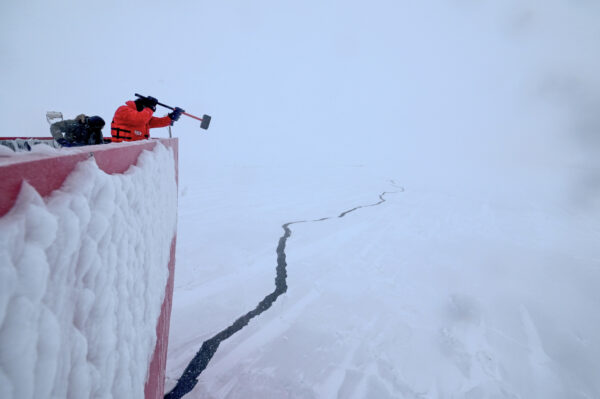
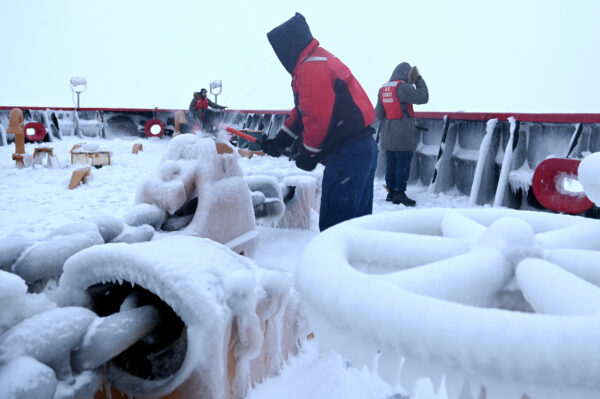
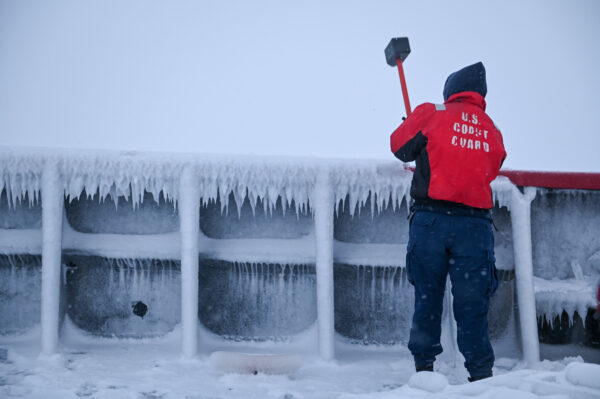
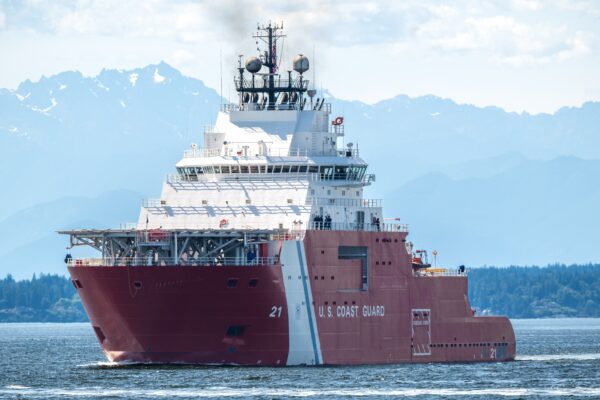
In 2025, a new icebreaker was added to the Coast Guard fleet. Built to support Shell Oil’s Arctic exploration program, icebreaker Aiviq was purchased by the Coast Guard and renamed Storis (WAGB 21), a name shared with famed World War II-era icebreaker Storis. Classified as a medium icebreaker, the new Storis is 360 feet in length, displaces nearly 13,000 tons and has four diesel engines producing 22,500 horsepower able to power the icebreaker through three feet of ice at five knots. She joins the Healy and Polar Star in serving the Coast Guard’s needs in the Arctic while work on replacement icebreakers continues.
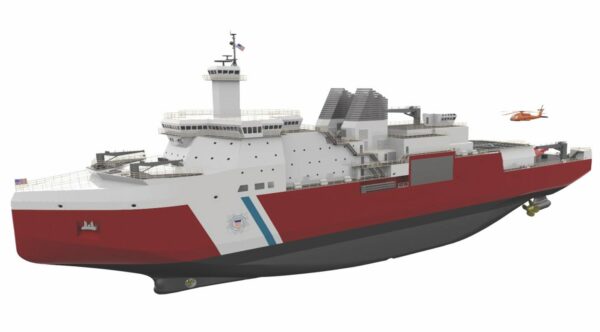
For future Coast Guard icebreaking, the service is embarking on a polar strategy based on a fleet of new medium and heavy icebreakers. The Arctic Security Cutter (ASC) and Polar Security Cutter (PSC) programs aim to produce cutters with state-of-the-art icebreaking, propulsion, communication, and weapons capabilities. Currently, the Arctic Security Cutter program of smaller icebreakers remains in the planning stages; however, the Polar Security Cutter program has been fully funded and is moving forward. At 460 feet in length and nearly 24,000 tons displacement, the PSCs will surpass the Healy as the largest vessels ever built for the Coast Guard. And, with a cost of over $1 billion each, they will be the most expensive. Meanwhile, the service is planning to extend the service lives of Polar Star and Healy to fulfill mission requirements until the PSCs come online.
During the past 80 years, Coast Guard icebreakers have given the United States the ability to protect national interests and project power into the polar regions. That role has depended largely on the service’s execution of traditional service roles, including maritime transportation, law enforcement, scientific research, search and rescue, defense readiness, and environmental protection. With greater strategic and commercial interests in icebound areas and advances in icebreaker technology, the Coast Guard’s ice operations have come a long way—and now are more important than ever.
National Coast Guard Museum insider tip: The National Coast Guard Museum will explore the long history of the Coast Guard’s polar icebreaking missions, including an interactive icebreaker simulator, in the Ice Operations exhibit on Deck 4.
About the Author(s)