
With the founding of the United States under the Constitution, Coast Guard predecessor services would begin to grow geographically in today’s Atlantic Area. In 1789, the U.S. Lighthouse Service was established and began its mission of overseeing lighthouses in the founding states of the Union. Over time, the Lighthouse Service would develop a district system to administer its lighthouses and buoy depots. The Lighthouse Service relied on this basic district system until its absorption by the modern Coast Guard in 1939.
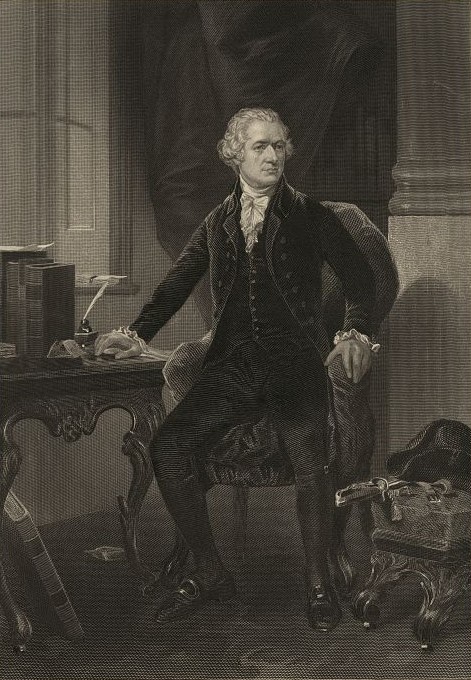
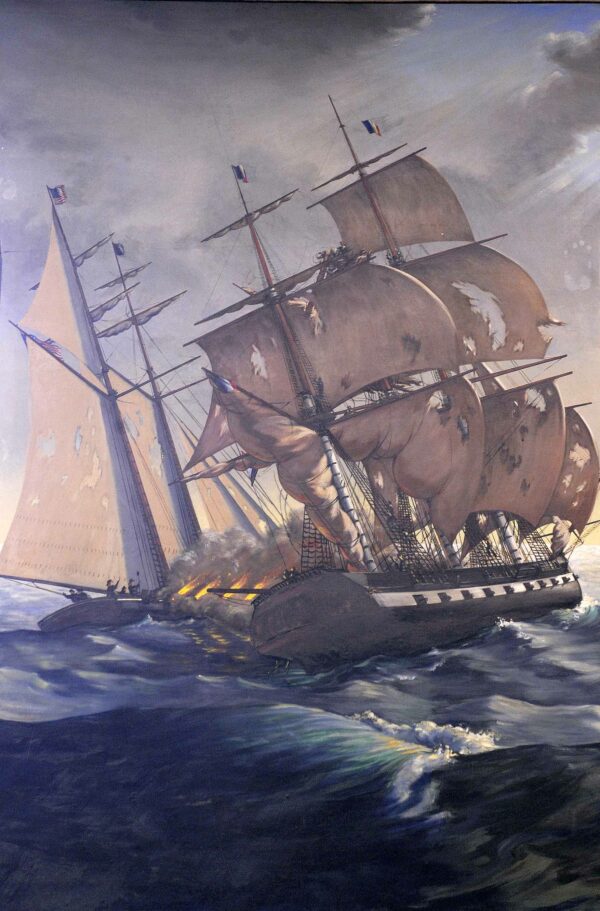
In 1790, a year after the Lighthouse Service founding, Treasury Secretary Alexander Hamilton established the U.S. Revenue Marine placing revenue cutters under direction of politically appointed customs collectors in major seaports. These included homeports at ten East Coast seaports from Savannah, Georgia, up to Portsmouth, New Hampshire. In 1798, less than ten years after establishment of the Revenue Marine, cutters deployed for the first time to international waters to serve in the Quasi War with France in the Caribbean.
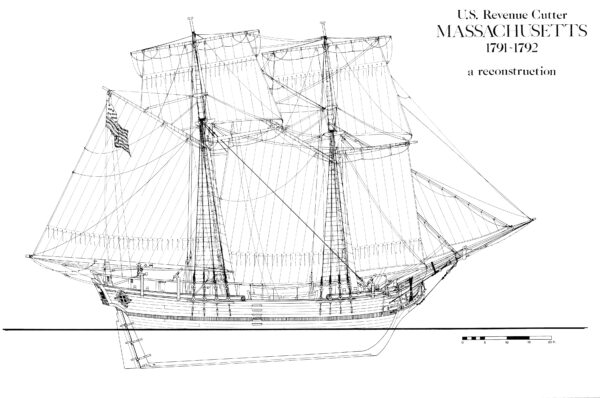
As the U.S. expanded from the East Coast to the Great Lakes and Gulf Coast, revenue cutters populated regional ports and lighthouses marked navigational hazards. In 1803, the Louisiana Purchase, including New Orleans, expanded Revenue Marine and lighthouse operations to the Gulf for the first time. By the time of the War of 1812, the Revenue Marine had already operated afloat units (small sailing boats) from Great Lakes ports. Unfortunately, during the war, all were destroyed or captured by the British. In 1821, Spain ceded Florida Territory to the U.S., including St. Augustine, Key West and Pensacola, expanding cutter and lighthouse operations from the Canadian border down to the Gulf except Texas.
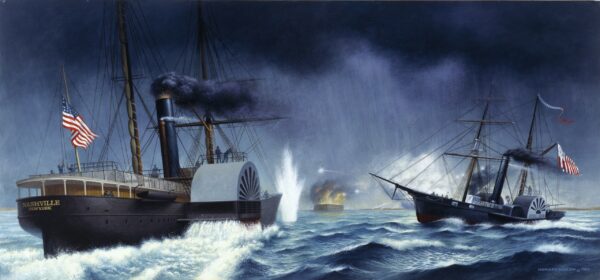
Beginning in the 1840s, revenue cutter and lighthouse operations expanded across the North American continent and into the Western Gulf. In 1845, the U.S. annexed Texas expanding revenue cutter patrols and lighthouse operations to the Western Gulf. In 1846, revenue cutters visited foreign waters in wartime for the second time to participate in the War with Mexico. And, in 1858, the U.S. government sent an expeditionary force to Paraguay, including Revenue Cutter Harriett Lane—the first time a revenue cutter visited internal South American waters. By 1860, the service stationed cutters in the Great Lakes, along the East Coast, and Gulf ports at Mobile, New Orleans (two cutters), and Galveston.
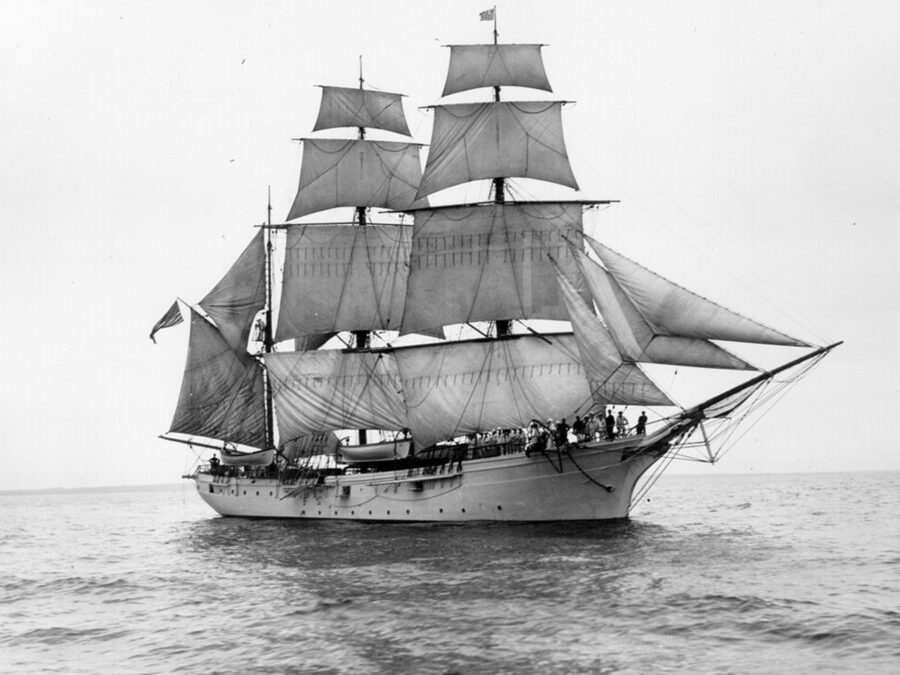
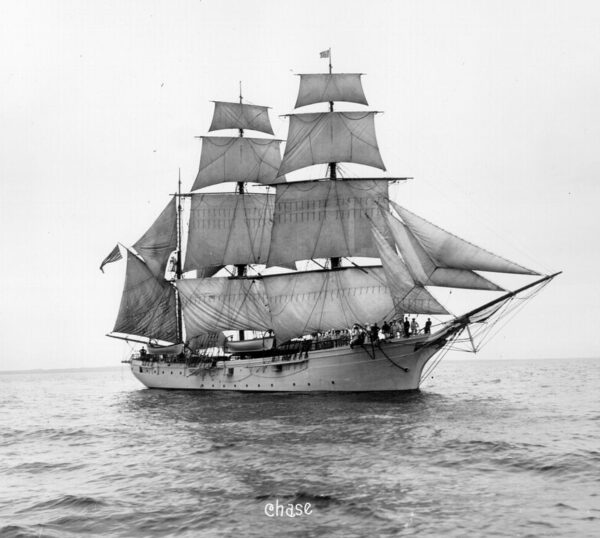
The late 19th century saw important changes affecting service expansion beyond American shores. During the 1880s, changes in technology, leadership and organizational structure unleashed the service from archaic practices, such as cutters serving under politically appointed customs collectors, and transformed the new U.S. Revenue Cutter Service into a modern military-style organization headed by a senior officer. Even though it was not a military agency, Revenue Cutter Service personnel now served in a military chain of command with its head, the commandant, located in the Treasury Department. In addition, the founding of the Coast Guard predecessor agency of the U.S. Life-Saving Service saw the growth of a network of countless boat stations populating Atlantic Area shores. Part of this modernization was founding of the Revenue Cutter Service School of Instruction, forerunner of the Coast Guard Academy. On board training ship Samuel P. Chase, service members visited Europe for the first-time in-service history.
When few foreign countries had a navy of their own, let alone a coast guard, the newly reorganized U.S. Revenue Cutter Service was sending cutters around the globe. In 1898, on its way to serve on the West Coast, Revenue Cutter McCulloch paid first-time visits to foreign ports in Europe, Mediterranean, Middle East, India, Hong Kong, and Singapore. That same year, the Spanish-American War not only stretched cutter and lighthouse operations into the Pacific, but it also pushed them south into the Caribbean. With the postwar annexation of Puerto Rico came Lighthouse Service oversight of several former Spanish lighthouses. A revenue cutter base located at San Juan soon followed. In 1903, Cuba signed a lease in perpetuity for Guantanamo Bay providing a base of operations for naval warships and revenue cutters. Guantanamo Bay also came under Lighthouse Service jurisdiction. Later, in 1917, the U.S. would purchase the U.S. Virgin Islands from Denmark increasing the modern Coast Guard’s Caribbean patrol area and providing the location for a small base of operations.
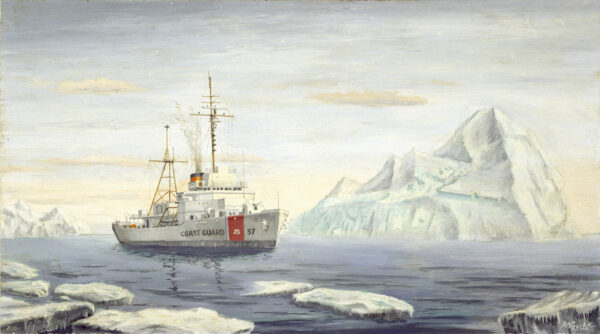
The early 20th century saw the Coast Guard continue to grow in scope and geographic reach. In April 1912, the horrific loss of life on board the passenger liner Titanic had motivated the international community to establish the International Ice Patrol (IIP) to locate icebergs and warn commercial vessels away from them. In 1913, the Revenue Cutter Service adopted the IIP mission, operating cutters in waters surrounding southern Greenland and North Atlantic for the first time.
The 1915 merger of the Life-Saving Service and the Revenue Cutter Service into the modern Coast Guard consolidated thousands of boat stations together with cutter bases throughout North America and the Caribbean. The U.S. entry in World War I in 1917, expanded the Coast Guard’s area of responsibility well beyond territorial waters with cutters serving in European waters for the first time. In addition, Coast Guard aviators served in Europe and afloat personnel served on Navy ships escorting convoys across the North Atlantic.


During the 1930s, under the direction of Russell Waesche (later Coast Guard commandant) the Coast Guard instituted the “Area” command structure. Initially, the Coast Guard had four Areas layered over Coast Guard districts. The original Coast Guard Areas included the Eastern Area, Western Area, Northern Area and Southern Area. This organizational model formed the basis of the system used today by the Coast Guard.
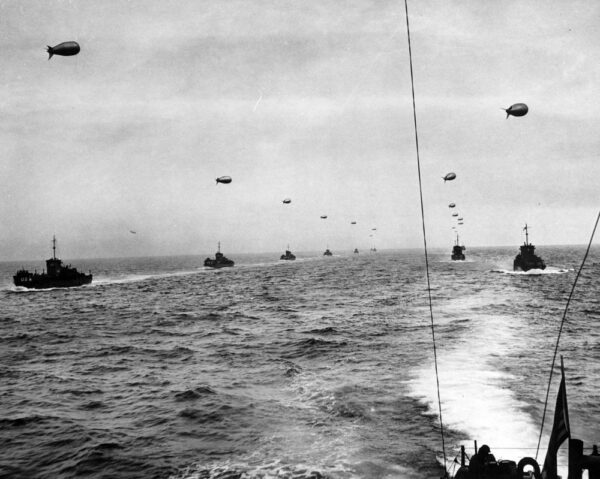
World War II sent the Coast Guard around the globe to lands never visited by a cutter nor served by aids to navigation. Before the war, the service was tasked with overseeing operations in Greenland and its surrounding waters. The service’s global reach expanded with transfer of the Coast Guard to the Navy to support naval operations with shore installations, beach patrols, buoy tenders, cutters, patrol craft, aircraft, weather ships, amphibious vessels, and transports. By 1942, Coast Guard-manned transports were making first time visits to the South Pacific, South Africa, India, and North Africa to deliver troops and, in some cases, evacuate civilians.
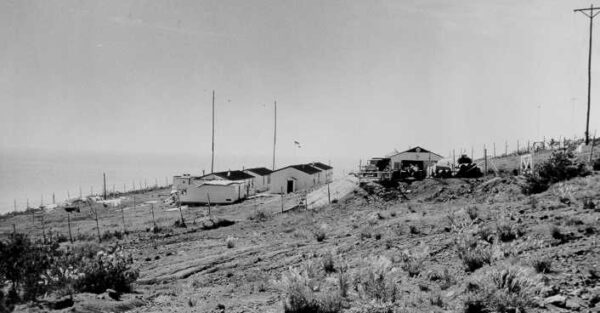
By the middle of the war, the Coast Guard began building a network of Long-Range Aids to Navigation, or LORAN, stations in the Atlantic theater of operations. By war’s end, the LORAN network extended from Europe to Greenland and across North America to the Pacific. Near the end of the war, the Coast Guard set up Merchant Marine Details in British and European ports. In the mid-1960s, Activities Europe (ACTEUR) was established to oversee Coast Guard units in Europe. Late in the war, the service also began establishing Aviation Detachments, or AIRDETS, at various airfields. In the 1940s and 1950s, the Coast Guard expanded its network of AIRDETs to cover the airspace from Italy across the globe to the Pacific.
After World War II, the Coast Guard retained the Area system with districts layered underneath. The districts were each overseen by a flag officer who held authority over all Coast Guard operations and activities in their district. After the war, these Areas underwent slight modifications, including consolidation of the original four Areas to just an Eastern Area and Western Area. Also, the old Third District, covering Rhode Island and Long Island was consolidated into District One headquartered in Boston.
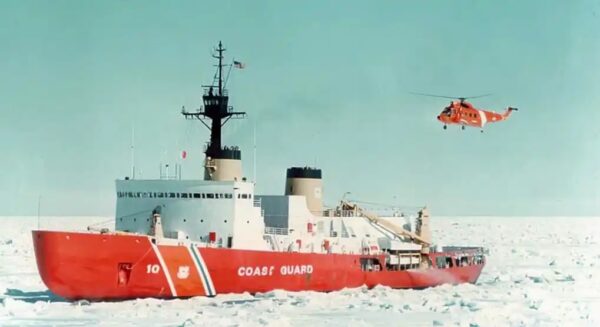
The Cold War years saw the Coast Guard visit new lands and cement its global footprint. In late December 1946, the Coast Guard visited Antarctica for the first time when the icebreaker Northwind inaugurated countless icebreaker missions to the “frozen continent.” In 1947. The same icebreaker began countless Coast Guard icebreaker missions to Greenland to open winter supply routes to the Air Force base at Thule and LORAN station at Cape Atholl. Driven by supply needs of Distant Early Warning (DEW) installations along Canada’s northern shores, cutters Storis, Bramble and Spar made a first time ever U.S. transit of the Northwest Passage in 1957, demonstrating that the bases could be accessed by icebreaking ships.
Meanwhile, the service operated Ocean Station cutters stationed across the Atlantic as weather ships and SAR vessels for transoceanic air travel. For commercial navigation and U.S. defense purposes, the service continued to oversee numerous LORAN stations around the Mediterranean, Baltic, and Caribbean as well as Greenland, and North America. In addition to missions to Antarctica, Coast Guard units pushed farther than ever into the Arctic. And, in 1952, the service stationed Cutter Courier in Greek waters to transmit Voice of America broadcasts into the Soviet Union for the next 12 years.
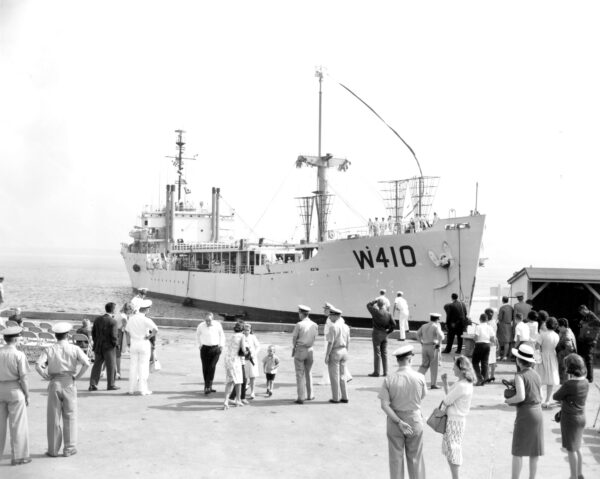
Beginning in January 1973, the Eastern Area underwent further organizational change. At that time, the Eastern Area was renamed Atlantic Area. On May 30, 1996, Atlantic Area districts underwent their final consolidation when districts Eight and Two (former Western Rivers) were combined to form a larger District Eight.
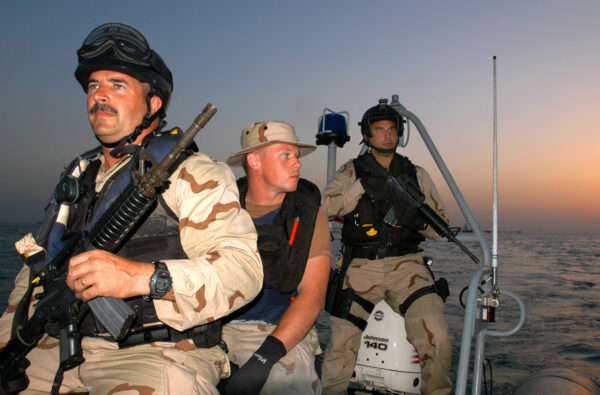
In the late 20th century and early 21st century, Atlantic Area’s area of responsibility continued to expand to include the Middle East for the first time. During the Persian Gulf War, operations Desert Shield and Desert Storm deployed Coast Guard units to Kuwait. These included Port Security Units, Law Enforcement Detachments, National Strike Force, and fixed-wing aviation units. In 2003, Operation Iraqi Freedom brought Coast Guard units to the Middle East a second time. These units included high-endurance cutters, 110-foot patrol boats, Port Security Units, the National Strike Force, and a buoy tender. In 2004, the service permanently commissioned the base Patrol Forces Southwest Asia or PATFORSWA in Bahrain. As part of Operation enduring Freedom, RAID and Coast Guard Cyber teams later deployed to Afghanistan to support safe cargo shipments and cyber security.
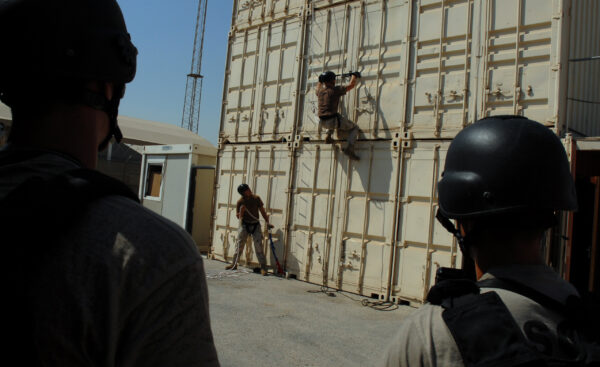
Late in the 20th century, funding cuts, automation, and technological obsolescence saw the reduction of Coast Guard units in Atlantic Area. As the satellite-based global positioning system (GPS) grew, the LORAN system declined until closure of all stations by the early 2000s. Meanwhile, the service closed its network of AIRDETS across the Atlantic. Today, the Coast Guard’s Atlantic Area footprint includes units in the Middle East and Europe.
The Coast Guard has served the Atlantic Area area of responsibility for over 235 years. As the nation’s overseas territories grew in the late 1800s, the Coast Guard’s predecessor agencies’ area of responsibility also grew. By the end of World War II, the Coast Guard operated afloat and shoreside units across the Pacific. Thus, the region has benefitted from the service’s law enforcement, humanitarian service, environmental protection and defense readiness missions. As the World War II song goes, the Coast Guard no longer guards just the coasts!
In 1790, Alexander Hamilton established a small fleet of coastal law enforcement vessels to patrol off East Coast seaports. Over the next 235 years, the Coast Guard’s Atlantic Area experienced rapid growth in its geographic area of responsibility. Today, Atlantic Area units and operations serve in locations from the Great Lakes to Europe to the Middle East!
National Coast Guard Museum insider tip: The Atlantic coast was the birthplace of the Coast Guard, and has been intrinsically tied to the service’s history for over 200 years. The National Coast Guard Museum will cover multiple aspects of this history, from the first lighthouses to the modern day.
About the Author(s)