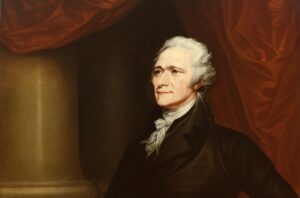
When the nation’s first Treasury Secretary, Alexander Hamilton, founded the service that would become today’s Coast Guard, it had no official title. It was simply referred to as “the cutters” or “the system of cutters.” Hamilton built this fleet to enforce tariff laws, so these vessels were armed but manned by civilian crews under the Treasury Department. In Hamilton’s words, “A few armed vessels, judiciously stationed at the entrances of our ports, might at a small expense be made useful sentinels of the laws.” After the disbanding of the Continental Navy in 1785, there was no American navy. So, between 1790 and the 1798 establishment of the U.S. Navy, Hamilton’s cutters were the only armed vessels protecting the coast, trade, and maritime interests of the new republic.
When the nation’s first Treasury Secretary, Alexander Hamilton, founded the service that would become today’s Coast Guard, it had no official title. It was simply referred to as “the cutters” or “the system of cutters.” Hamilton built this fleet to enforce tariff laws, so these vessels were armed but manned by civilian crews under the Treasury Department. In Hamilton’s words, “A few armed vessels, judiciously stationed at the entrances of our ports, might at a small expense be made useful sentinels of the laws.” After the disbanding of the Continental Navy in 1785, there was no American navy. So, between 1790 and the 1798 establishment of the U.S. Navy, Hamilton’s cutters were the only armed vessels protecting the coast, trade, and maritime interests of the new republic.
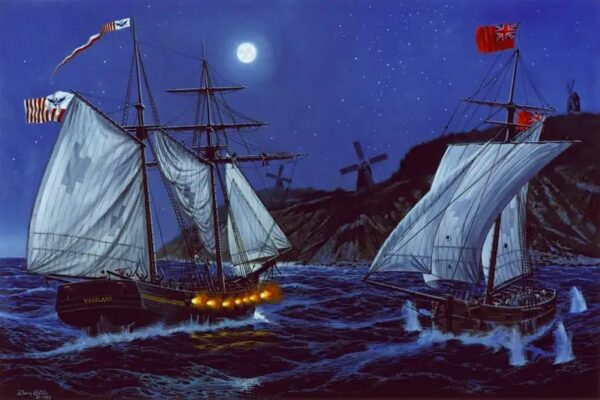
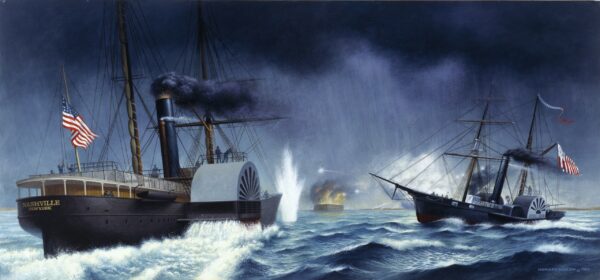
Apart from the Barbary Wars, the Revenue Cutter Service participated in every American naval conflict of the 1800s. With each new conflict, the service added a new layer of combat roles. The War of 1812 marked the beginning of cutters engaging in shallow water combat operations, a wartime mission they have conducted ever since. They also delivered important personnel and dispatches, escorted convoys of commercial vessels and enforced port and coastal security. During the Seminole Wars, cutters attacked war parties, broke up rendezvous points, rescued survivors of raids, transported troops and supplies, and secured inland waterways from hostile control. During the War with Mexico, revenue cutters continued their earlier combat missions and added the new mission of enemy port blockading and amphibious operations. In the Civil War, cutters added the new missions of shore bombardment, command-ship duty, and enforcement of offshore blockades. The Revenue Cutter Service also rendered conspicuous service during the Spanish-American War with cutters serving in the Caribbean theater and, for the first time, in combat operations outside the Western Hemisphere, including the Battle of Manila Bay in the Philippines.
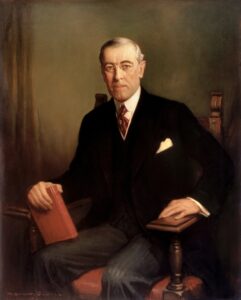
In January 1915, President Woodrow Wilson signed the “Act to Create the Coast Guard,” merging the U.S. Life-Saving Service with the U.S. Revenue Cutter Service. The act formally designated the new “Coast Guard” as a military service. So, on April 6, 1917, the day the U.S. formally entered World War I, Coast Guard operations transferred seamlessly from the Treasury Department to the Navy. It was the first conflict in which the Coast Guard served as a branch of the Navy, a tradition that has continued in modern times.
During the 20th century, the Coast Guard saw dramatic changes, including the introduction of aviation to the service; rapid influx of assets and personnel during Prohibition and World War II; a merger with the U.S. Lighthouse Service; formation of the Coast Guard Reserve and Coast Guard Auxiliary; racial and gender integration of the service; addition of the former Bureau of Marine Safety and Navigation; and the development and implementation of new maritime and aviation technology, such as LORAN and the helicopter. During the 1900s, the Coast Guard continued to perform its combat missions and carried out its traditional service missions, such as aids to navigation; search and rescue; marine safety; and port security.

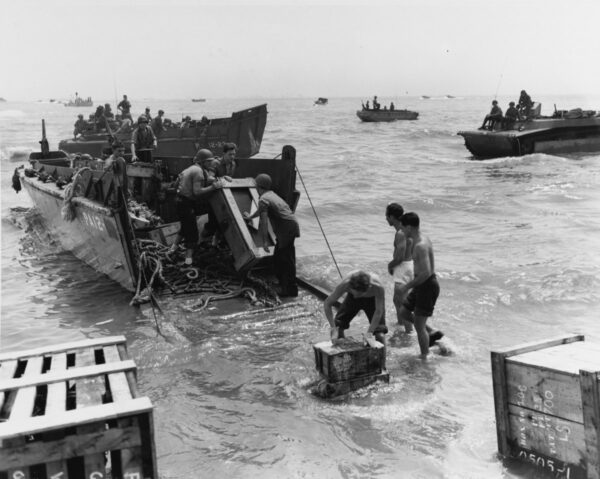
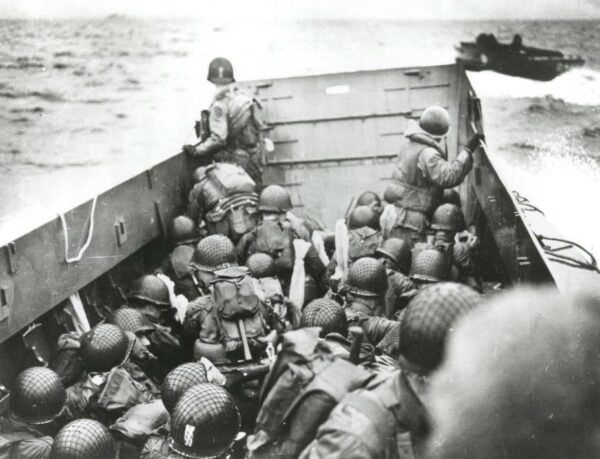
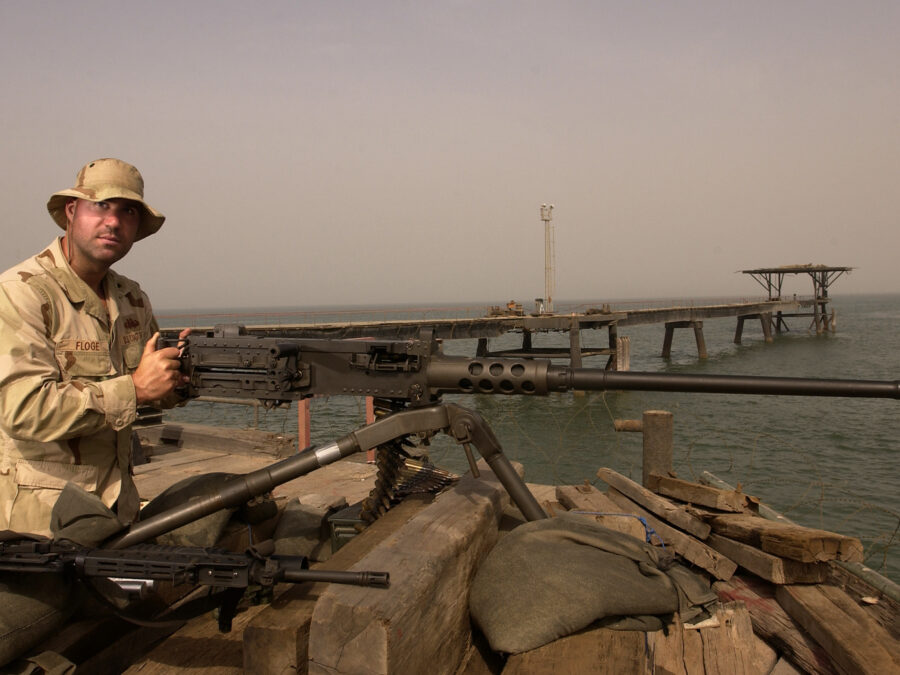
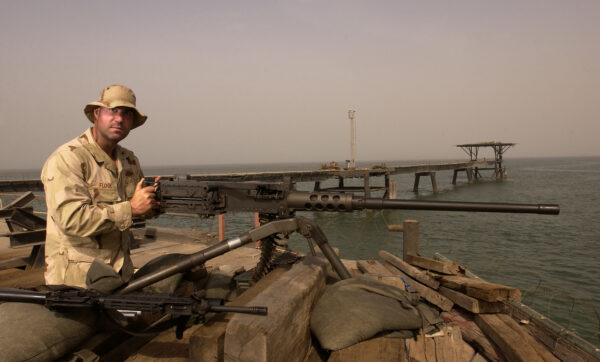
The service has also fought in modern conflicts. In operations Desert Shield and Desert Storm, Coast Guard law enforcement detachments (LEDETs) helped clear enemy oil platforms and boarded hundreds of foreign-flagged commercial vessels. The service also deployed Reserve Port Security Units (PSUs) and flew aviation missions to monitor spills from sabotaged Iraqi oil platforms. In Operation Iraqi Freedom, Coast Guard LEDETs provided maritime interdiction and boarding support while PSUs deployed to ports in Bahrain, Kuwait and Iraq. Coast Guard cutters, aircraft and personnel also provided oil terminal security, maritime environmental response expertise, and aids-to-navigation to mark the shipping channel on Khor Abd Allah waterway. And, in the Global War on Terrorism, the Coast Guard continues to protect the nation from threats to its maritime interests at home and abroad.
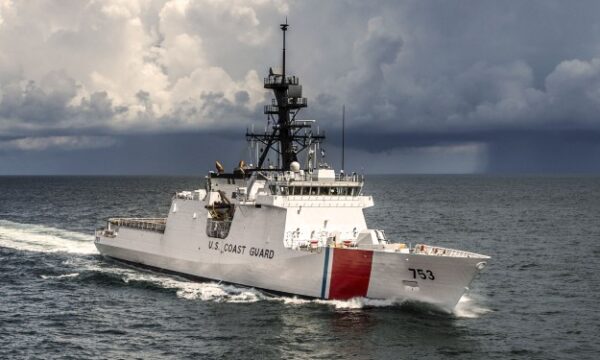
Whether equipped with sailing cutters of the 18th century or modern National Security Cutters, the Coast Guard has fulfilled its Defense Readiness mission for over 235 years. Regardless of the maritime threats and challenges confronting America today and tomorrow—whether it’s rescuing mariners in distress, protecting our nation from illegal drugs, preventing and responding to oil spills, or safeguarding the nation against military threats—whenever and wherever needed—the Coast Guard remains Semper Paratus!
National Coast Guard Museum insider tip: Visitors to the National Coast Guard Museum will have the opportunity to explore the Coast Guard’s military legacy through immersive exhibits, artifacts, and audio-visual experiences in the Defenders of our Nation wing on Deck 3.
About the Author(s)